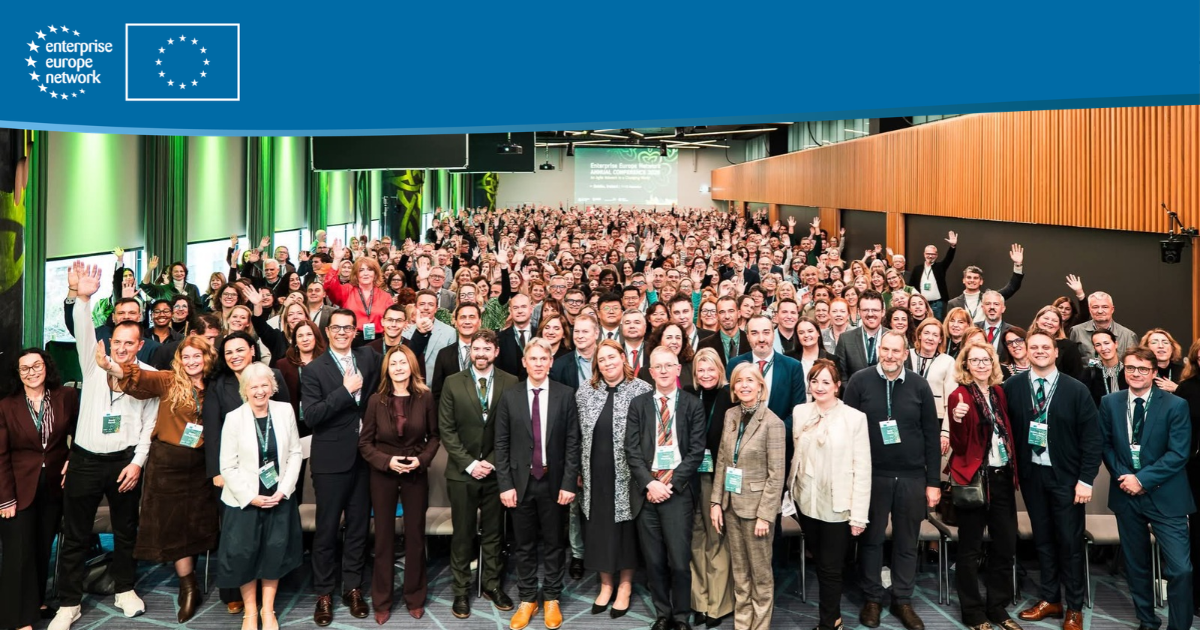
Enterprise Europe Network Hellas made a strong contribution to the Enterprise Europe Network Annual Conference 2026, which took place from 11 to 13 November at the Croke Park Conference Centre in Dublin, Ireland.
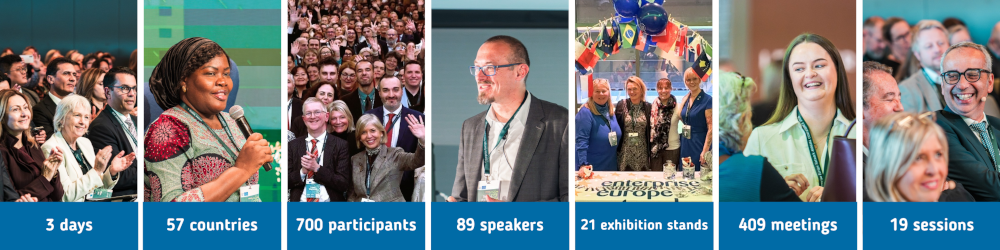
Under the theme “An Agile Network in a Changing World”, this year’s conference brought together 700 participants and 89 speakers, with 57 countries represented. Through 19 sessions, practical workshops and networking activities, the event provided three days of collaboration, learning and knowledge exchange, exploring how the Network can help small and medium-sized enterprises (SMEs) remain competitive, resilient and ready for new challenges.
With broad representation from its partner organisations, Enterprise Europe Network Hellas contributed to the conference through speakers and session moderators, representatives of the Network’s strategic and advisory bodies and expert groups, as well as business and innovation advisers.
European business priorities in a changing world
The conference focused on strengthening European competitiveness, improving the functioning of the Single Market, simplifying the EU regulatory framework, facilitating access to finance and international markets, supporting the green and digital transition, and harnessing the potential of artificial intelligence (AI).
The opening plenary, “One Europe, One Market: Delivering Competitiveness through the Enterprise Europe Network”, featured welcome addresses by Peter Burke, Ireland’s Minister for Enterprise, Tourism and Employment, and Daryl Barron, Lord Mayor of Dublin, followed by a fireside chat between Anna Athanasopoulou, Director for Simplification and Networks at DG GROW, and Momchil Sabev, Director of EISMEA, on the Network’s role in strengthening European competitiveness and supporting SMEs.
Four main thematic strands guided the conference discussions, reflecting key EU policy priorities:
- Single Market and beyond: improving SMEs’ access to European and global markets through regulatory simplification, international partnerships and EU trade agreements.
- Industrial transition: supporting businesses in addressing technological, environmental and economic challenges, with a focus on energy resilience, circularity, decarbonisation and digitalisation.
- Innovation and Start-ups: helping innovative SMEs access finance, attract investment, protect intellectual property and scale their activities.
- Quality and Impact: strengthening the Network’s services through digital tools, artificial intelligence, improved SME feedback and new approaches to business support.
Particular attention was paid to the future priorities of European business policy, including discussions on the proposed European Competitiveness Fund and the transition towards the proposed EU for Business Network.
Through dialogue with representatives of the European Commission and the European Innovation Council and SMEs Executive Agency (EISMEA), participants explored how the experience, expertise and tools developed by the Enterprise Europe Network could inform the future of European business support and help translate EU policy priorities into practical solutions for SMEs.
The Greek contribution to the thematic sessions
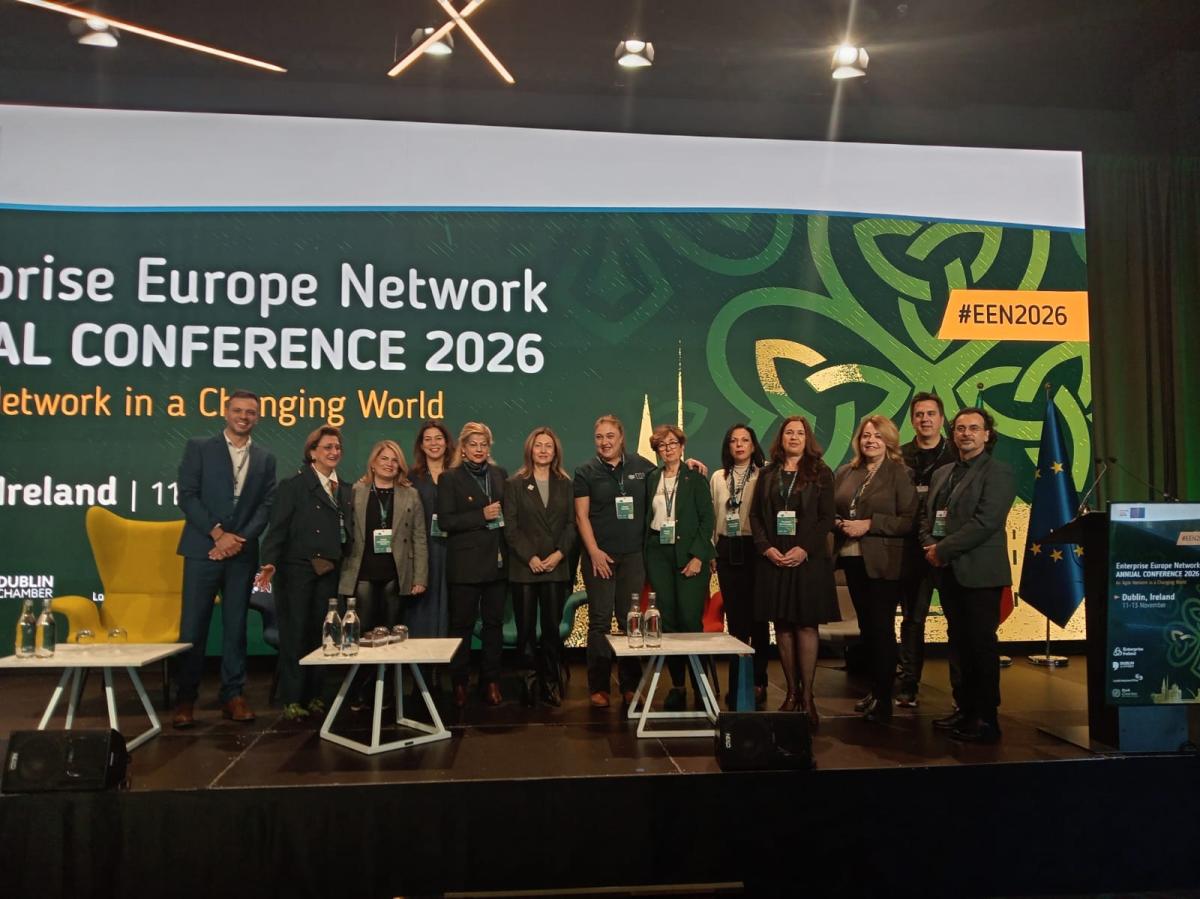
Representatives of the National Documentation Centre (EKT), PRAXI Network, the Federation of Industries of Greece (SBE) and ANKO Western Macedonia S.A. contributed to six thematic sessions, showcasing the Greek consortium’s expertise across different areas of business and innovation support.
1. Bringing the voice of SMEs into European policymaking
In the session “Turning Feedback into Impact”, Monika Nagy, Chair of the Enterprise Europe Network’s SME Feedback Working Group from SBE, and Anastasia Sarchosoglou, Co-Chair of the Working Group and Coordinator of Enterprise Europe Network Hellas from EKT, contributed to the discussion on how SME feedback can inform European policies and improve business support services.
The discussion focused on strengthening SME participation in European consultations, improving feedback collection processes and ensuring that the experience and needs of businesses are reflected in the development of more effective policies and services.
In the official post-conference article published by the Enterprise Europe Network, Monika Nagy highlighted the importance of face-to-face exchanges with colleagues in understanding the common challenges businesses face across different countries:
“You can see the spark of recognition in their eyes when you talk to them about the problems that your SME clients are having, the barriers they're facing, the issues they're having on a day-to-day basis.”
2. Regulatory simplification and business growth
In the session “Simplification in Action: Turning EU Policy into Growth”, Anastasia Sarchosoglou joined a discussion with Anna Athanasopoulou, Director for Simplification and Networks at the European Commission’s Directorate-General for Internal Market, Industry, Entrepreneurship and SMEs (DG GROW).
Drawing on examples from different business sectors, the session explored the administrative and regulatory barriers faced by SMEs, opportunities for simplifying procedures and the Network’s role in conveying businesses’ first-hand experiences to EU institutions.
The discussion highlighted how reducing administrative burdens and translating EU policy into practical support can help SMEs grow and become more competitive.
3. Open innovation and connecting corporates with SMEs
Dr Achilleas Barlas, Co-Coordinator of Enterprise Europe Network Hellas and member of the Network’s Aerospace & Defence Sector Group from PRAXI Network, moderated the session “Open Innovation Challenges: Connecting Corporates and SMEs”, highlighting the potential of open innovation to foster business and technology partnerships.
The discussion focused on connecting corporates with innovative SMEs, developing solutions that address real business needs and the role of the Enterprise Europe Network in facilitating such collaborations.
A compelling example of the Network’s measurable impact is the achievement of 46 Partnership Agreements (PAs) resulting from a single B2B matchmaking event organised by the Aerospace & Defence Sector Group. This outcome demonstrates the effectiveness of targeted business matchmaking and the Network’s ability to turn business contacts into meaningful partnerships.
4. International trade agreements and growth in the agri-food sector
Spyros Kellidis, Chair of the Enterprise Europe Network’s Agri-food Sector Group and Innovation Adviser at ANKO, contributed to the session “Trade Agreements for Agri-food Growth”.
The session explored the opportunities created by international trade agreements for agri-food businesses, access to new markets and the support available to SMEs seeking to strengthen their internationalisation and global competitiveness.
5. From intellectual property to business impact
Dr Kostas Vavekis, Co-Chair of the Network’s expert group on intellectual property (IP) and Technical Manager at PRAXI Network, contributed to the session “From IP to Business Impact”.
The discussion highlighted the strategic importance of intellectual property for business growth, as well as the tools and services available through the Network to help innovative SMEs protect, leverage and commercialise their intellectual assets and scale their activities.
6. Responsible and trustworthy communication in the age of AI
Natasa Kyriakidi, Communication Champion of Enterprise Europe Network Hellas from EKT, contributed as a speaker to the session “Trustworthy AI Communication for SMEs”, organised by the Network’s Communication Champions.
Drawing on practical examples of AI applications in everyday professional communication, the presentation explored the opportunities offered by AI tools, alongside the risks associated with misinformation, algorithmic bias, deepfakes, loss of authenticity and lack of transparency.
Particular emphasis was placed on human judgement, content verification and the importance of maintaining credibility and trust in business communication.
Greek representation in the Network’s strategic meetings
The Greek consortium’s contribution extended beyond the thematic sessions, with its representatives participating in key working meetings and strategic discussions on the future of the Network.
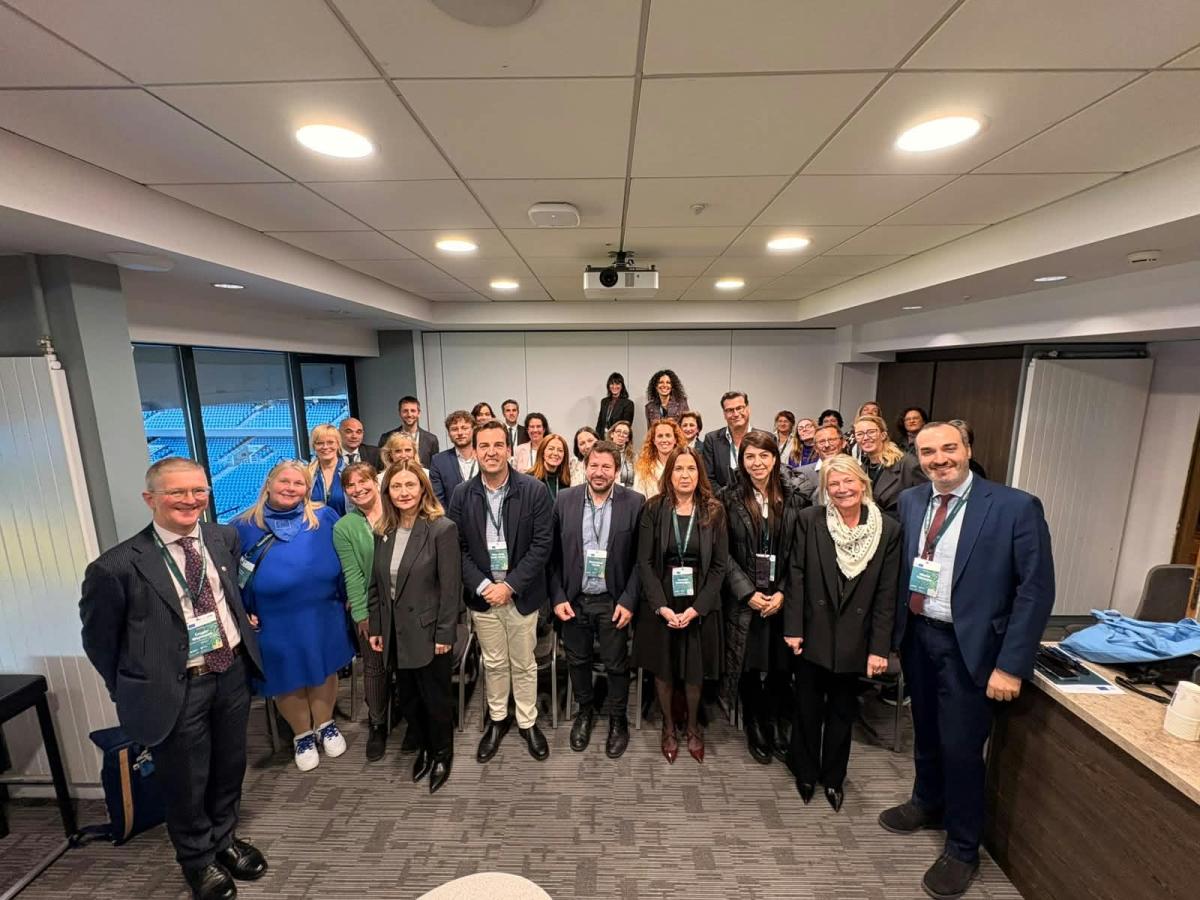
Anastasia Sarchosoglou, Coordinator of Enterprise Europe Network Hellas at EKT, and Dr Achilleas Barlas, Co-Coordinator of Enterprise Europe Network Hellas from PRAXI Network, participated in a meeting with Momchil Sabev, Director of EISMEA, alongside the coordinators of the Bulgarian and Slovak consortia.
Furthermore, Dr Achilleas Barlas, in his capacity as a member of the Strategic Advisory Group (SAG) Bureau, participated in a working meeting with Anna Athanasopoulou, Director for Simplification and Networks at DG GROW.
The Greek consortium was also represented in meetings between the Chairs and Co-Chairs of the Network’s expert groups and Anna Athanasopoulou by Spyros Kellidis (ANKO), Chair of the Agri-food Sector Group; Dr Kostas Vavekis (PRAXI Network), Co-Chair of the expert group on intellectual property; and Anastasia Sarchosoglou (EKT), Coordinator of Enterprise Europe Network Hellas and Co-Chair of the SME Feedback Working Group.
These meetings, involving representatives of the European Commission and EISMEA, provided a platform for dialogue on the Network’s operations, strategic priorities, feedback mechanisms and the effective use of its expert groups’ specialised knowledge to enhance business support services.
The Greek consortium’s representation in these bodies demonstrates its active contribution not only to the delivery of the Network’s services but also to the broader strategic dialogue on its future development.
Networking, knowledge exchange and business collaboration
Networking and collaboration opportunities formed an integral part of the conference, with dedicated Network & Connect spaces bringing Network members together through informal exchanges, exhibition stands and matchmaking activities.
Over the three days, 409 individual meetings took place, enabling participants to identify potential partners, discuss joint activities and explore new ways of supporting their business clients.
Across 21 exhibition stands, participants discovered European programmes, projects, tools and initiatives supporting SMEs in areas including innovation, digitalisation, sustainability, internationalisation and access to finance.
Among the exhibitors were European programmes and initiatives such as Access2EIC, Eureka, Up2Circ, the EU Sanctions Helpdesk and the Marie Skłodowska-Curie Actions, alongside organisations including Eurochambres and the European Clusters Alliance.
Representatives of the Greek consortium exchanged expertise with colleagues from other countries, strengthened existing partnerships and explored opportunities to develop new joint initiatives.
Reflecting on the value of international collaboration in the Network’s official post-conference article, Spyros Kellidis from Enterprise Europe Network Hellas emphasised:
“One very important idea that I take back home from the conference is how wonderful it was to work closely in person with colleagues from different countries, different regions, different cultures.”
The inclusion of insights from both Monika Nagy and Spyros Kellidis in the official Enterprise Europe Network conference article further highlights the Greek consortium’s active engagement in the Network’s international community and its commitment to knowledge exchange and cross-border collaboration.
As part of these networking activities, the Greek delegation also met with Soti Christou, Coordinator of Enterprise Europe Network Cyprus from the Cyprus Chamber of Commerce and Industry, reaffirming the close ties and ongoing cooperation between the two national networks.
EEN2EIC and the recognition of the Investment Readiness Scorecard
At the conference exhibition, Dr Ioannis Kortidis, member of the Network’s Electronics Sector Group from PRAXI Network, represented the European project EEN2EIC, presenting opportunities for connecting innovative SMEs and start-ups with the European Innovation Council (EIC), facilitating their access to funding and supporting their further growth.
A notable achievement was the recognition of the Investment Readiness Scorecard under the Special EEN Tools Prize, which highlighted practical innovation within the Network.
Out of 11 nominated tools, three were selected by a jury:
- Investment Readiness Scorecard
- Energy Tool for Enterprise Europe Adviser
- Voluntary Sustainability Reporting Standard for SMEs
These tools help Network advisers enhance their day-to-day support for SMEs by assessing investment readiness, developing tailored energy action plans and simplifying voluntary sustainability reporting.
The recognition of the Investment Readiness Scorecard highlights the importance of practical, accessible tools in helping innovative businesses identify their strengths and areas for improvement when preparing to attract investment.
Communication Champions and the Network’s communication activities
The Network’s Communication Champions also played an active role in the conference, with the participation of Natasa Kyriakidi, Communication Champion of Enterprise Europe Network Hellas at EKT.
In addition to organising the thematic session on responsible and trustworthy AI communication, the Communication Champions hosted a dedicated exhibition stand, creating opportunities for Network partners to exchange experiences, ideas, tools and communication best practices.
The group’s collaborative work aims to strengthen the visibility and recognition of the Enterprise Europe Network, communicate its services more effectively and develop a communication approach tailored to the evolving needs of European SMEs.
The Greek delegation in Dublin
Enterprise Europe Network Hellas was represented at the Annual Conference by 17 professionals from 11 partner organisations:
- National Documentation Centre (EKT): Anastasia Sarchosoglou, Natasa Kyriakidi.
- PRAXI Network: Dr Achilleas Barlas, Dr Kostas Vavekis, Dr Ioannis Kortidis.
- Athens Chamber of Small and Medium Industries (BEA): Mina Peleki.
- Heraklion Chamber of Commerce and Industry: Dr Maria Symeonidou.
- Federation of Industries of Greece (SBE): Monika Nagy.
- Arcadia Chamber of Commerce and Industry: Evgenia Tzanetopoulou.
- Kavala Chamber of Commerce and Industry: Souzi Mavrommati.
- Association of Industries of Thessaly and Central Greece (SBTCG): Georgia Fragkou, Christina Eleni Zarbouni.
- ANKO Western Macedonia S.A.: Liana Papaterpou, Spyros Kellidis.
- Athens Chamber of Commerce and Industry (ACCI): Tania Argyriou, Dia Drossou.
- Small Enterprises Institute of the Hellenic Confederation of Professionals, Craftsmen and Merchants (IME GSEVEE): Stavros Iliadis.
The broad representation of the Greek consortium facilitated the exchange of knowledge and experience across different areas of business support, strengthening cooperation both among Greek partner organisations and with international Network partners.
From European dialogue to practical support for Greek businesses
The participation of Enterprise Europe Network Hellas in the Annual Conference in Dublin highlighted the Greek consortium’s multifaceted role within the European Network through its contribution to thematic sessions, strategic and advisory bodies, and specialised expert groups.
Beyond the conference itself, the knowledge gained, the new connections established and the exchange of practical tools and best practices provide a foundation for further collaboration and the continuous improvement of the Network’s services.
For Enterprise Europe Network Hellas, translating these insights into practical support means helping Greek SMEs access new markets, innovate, strengthen their resilience and seize international growth opportunities.
As the Network looks ahead to its next Annual Conference in Brussels in 2027, the relationships and knowledge shared in Dublin will continue to support collaboration across countries, sectors and areas of expertise.
The conference was organised by the European Commission’s Directorate-General for Internal Market, Industry, Entrepreneurship and SMEs (DG GROW) and the European Innovation Council and SMEs Executive Agency (EISMEA), with support from Enterprise Europe Network Ireland.